
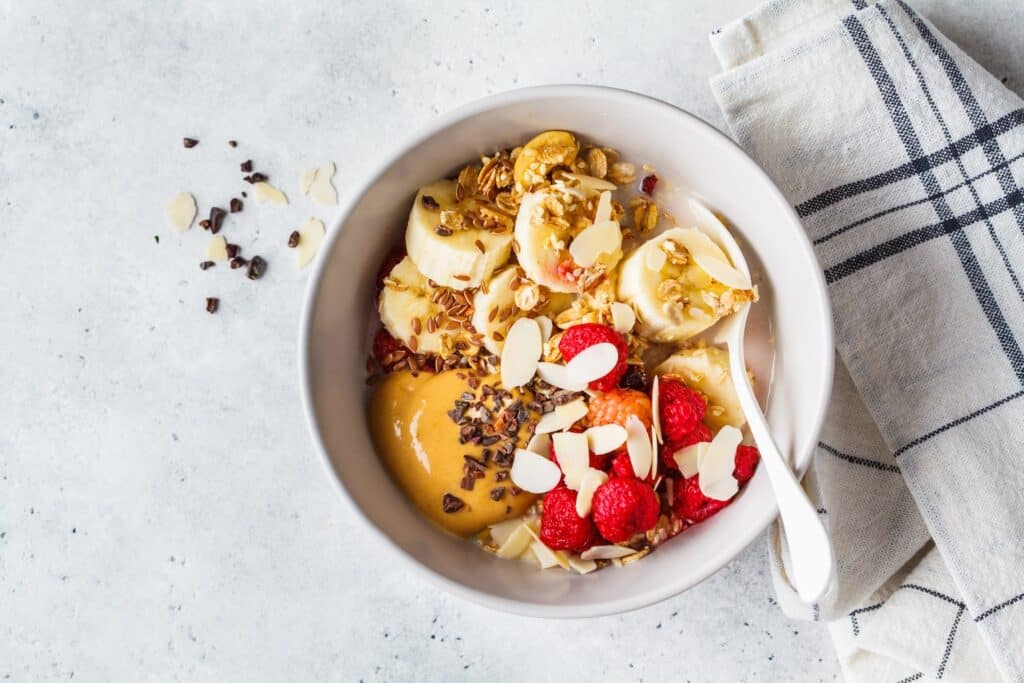
The benefits of fiber go far beyond digestion. Fiber can help meals feel more satisfying and support regulation of blood sugar and cholesterol. Fiber-rich foods are a part of a nutrient-dense eating pattern. (2,3)
Here is what fiber does, how much you need, and how to get more of it without making your meals complicated.
What Does Fiber Do for the Body?
Dietary fiber is found in plant foods like fruits, vegetables, beans, lentils, whole grains, nuts, and seeds. Your body cannot fully break fiber down and absorb it the way it does with other carbohydrate sources. (1,2)
That may sound like a downside, but it is part of what makes fiber useful.
As fiber moves through your digestive system, it can help add bulk to stool, support regular bowel movements, and slow how quickly food moves through parts of the gut. Some dietary fibers are also fermented by gut bacteria, which means they can help feed helpful microbes in the colon. (1,2)
Fiber-rich foods also tend to come with a whole host of other nutrients. For example, beans and lentils provide fiber, plant-based protein and phytochemicals such as flavonoids (18). Fruits and vegetables provide fiber plus vitamins and minerals. Whole grains provide fiber along with B vitamins. (3)
That is why a good source of fiber is usually not just about one nutrient. It is about the whole food and how it fits into your day.
Insoluble vs Soluble Fiber: What Is the Difference?
There are two main types of fiber: soluble and insoluble. Most high-fiber foods contain a mix of both, but the balance can vary. (2,19)
Soluble fiber
Soluble fiber dissolves in water and can form a gel-like substance in the digestive tract. It is found in foods like oats, barley, beans, lentils, apples, citrus fruits, and some seeds. (2,19)
This type of fiber may help slow digestion. Certain soluble fibers can also help lower LDL cholesterol when eaten regularly as part of a healthy diet. (2,5)
Insoluble fiber
Insoluble fiber does not dissolve in water. It helps add bulk to stool and supports movement through the digestive tract. (2)
Insoluble fiber is found in many plant foods, including whole grains, beans, nuts, seeds, and vegetables. (2,19)
Both types of fiber matter, but most people can focus on meeting total fiber goals by eating a variety of plant foods. (2,3)
Benefits of Fiber That Matter Most
Fiber supports regular digestion
Fiber can help support bowel regularity, especially when it is paired with enough fluid. (2,19)
That doesn’t mean fiber resolves all digestive issues. There can be many causes, and some people with digestive conditions may need personalized advice. But for many people, eating more fiber-rich foods is a helpful place to start for issues such as constipation. (6)
Fiber may support heart health
Higher fiber intake is linked with lower risk of coronary heart disease and stroke. (4)
Soluble fibers, including fibers found in foods like oats, barley, beans, and some fruits, may also help lower LDL cholesterol. (2,5)
Fiber may help with blood sugar control
Fiber can slow digestion and the absorption of carbohydrates, which may help reduce sharp rises in blood sugar after meals. (2)
That is one reason fiber-containing carbohydrate foods, such as beans, lentils, fruit, and whole grains, can be useful choices in balanced meals. (2,3)
Fiber can help meals feel more satisfying
Fiber adds volume to meals and slows digestion, which can help meals feel more filling. (2)
This does not mean you need to eat very high fiber at every meal. It means adding a fiber source to meals and snacks can make them more balanced. (3)
For example, you might add berries to yogurt, beans to a salad, lentils to soup, or vegetables to a grain bowl.
Fiber may support gut health
Some types of fiber, called fermentable fibers, help feed the helpful bacteria that live in your gut. Many of these are soluble fibers, found in foods like beans, lentils, oats, barley, fruits, and some vegetables. When gut bacteria break these fibers down, they make compounds that help support a healthy gut environment. (19)

You might also like
5 Signs You’re Not Eating Enough Fiber
How Much Fiber Do I Need a Day?
The recommended daily fiber intake depends on age, sex, and overall calorie needs. The Adequate Intake for fiber recommendations are based on14 grams of fiber per 1,000 calories. (1,3)
Here is a simple adult guide: (1,3)
| Group | Recommended daily fiber |
| Women ages 19-30 | 28 grams per day |
| Women ages 31-50 | 25 grams per day |
| Women ages 51+ | 22 grams per day |
| Men ages 19-30 | 34 grams per day |
| Men ages 31-50 | 31 grams per day |
| Men ages 51+ | 28 grams per day |
The FDA also uses 28 grams as the Daily Value for fiber on Nutrition Facts labels, based on a 2,000-calorie diet. (2)
If you are not sure how much fiber you eat now, tracking meals in the MyFitnessPal app can help you estimate your average fiber intake and spot meals that are usually low in fiber. You do not need to be perfect; noticing patterns can help you decide where to add more.
A Simple Fiber Foods List
To meet your daily fiber goals, focus on including a variety of fiber-rich foods from different categories throughout your week, rather than relying on just a few sources.
Approximate fiber amounts vary by brand, cooking method, and serving size, but these examples can give you a useful starting point:
| Food | Serving | Approximate fiber |
| Lentils, cooked | 1 cup | 16 g (7) |
| Black beans, cooked | 1 cup | 15 g (8) |
| Chickpeas, cooked | 1 cup | 13 g (9) |
| Chia seeds | 1 ounce | 10 g (10) |
| Green peas, cooked | 1 cup | 9 g (11) |
| Raspberries, raw | 1 cup | 8 g (12) |
| Frozen brussels sprouts, cooked | 1 cup | 6 g (13) |
| Pear, raw | 1 medium | 6 g (14) |
| Quinoa, cooked | 1 cup | 5 g (15) |
| Apple with skin | 1 medium | 4 g (16) |
| Almonds | 1 ounce | 4 g (17) |
| Avocado | 1 cup | 10 g (20) |
A few patterns stand out. Beans and lentils are some of the most fiber-rich foods. Berries and pears can add a significant amount of fiber to snacks and breakfasts. Whole grains like quinoa and oats can help replace grains that are low in fiber. Nuts and seeds add smaller amounts, but are helpful when they are consumed regularly. “It’s about finding little ways to add fiber into your existing meal routine that will make a big difference over time!” as Brookell White, RD, MyFitnessPal Registered Dietitian, explains.
How To Get More Fiber in Your Diet
1. Add fiber at breakfast
Breakfast is an easy place to start. Try adding fiber-containing foods from the table, such as berries or chia seeds, to a meal you already eat. (10,12)
2. Use beans and lentils more often
Lentils, beans, chickpeas, and green peas are rich in fiber and can also provide plant-based protein. (7,8,9,11)
Add them to soups, salads, tacos, grain bowls, pasta dishes, or wraps. You can start with a small amount if you are not used to eating them.
3. Choose whole grains when you can
Whole grains usually provide more fiber than refined grains. (3)
Try oats, brown rice, quinoa, barley, bulgur, farro, whole-wheat pasta, or whole-grain bread. When shopping, check the Nutrition Facts label. A food with 5% Daily Value or less of fiber per serving is considered low, while 20% Daily Value or more is considered high. (2)
4. Add fiber rich vegetables to meals you already eat
You do not need to overhaul your meals. Add cooked green peas to soup or frozen cooked Brussels sprouts to dinner. (11,13)
White recommends pairing fiber and protein when possible. “Beans and lentils can be helpful because they provide both fiber and plant-based protein,” she says. (7,8)
5. Increase fiber slowly
Adding too much fiber too fast can lead to gas, bloating, or cramping. The National Academies did not set an upper limit for fiber from food. (1)
White recommends increasing fiber by about 2-3 grams every couple of days, until you reach your target. She also mentions that drinking enough fluid can also help as you increase fiber. (19)
For more everyday ideas, you can also browse the MyFitnessPal Community to see how other members add fiber-rich foods like beans, berries, vegetables, and whole grains to meals and snacks.
Frequently Asked Questions (FAQs)
- What are signs you may be low in fiber?
Constipation may be one sign that your diet is low in fiber, though constipation can have many causes. (6) If you often eat too few fruits, vegetables, beans, lentils, or whole grains, your diet is also likely low in fiber. (3)
- How much fiber is too much?
There is no official upper limit for dietary fiber from food. (1) Adding a lot of fiber at once may cause digestive discomfort, so increase slowly and give your body time to adjust. (19)
- What foods are low in fiber?
Foods made mostly with refined grains, such as many white breads, regular pasta, pastries, and low-fiber cereals, are often low in fiber compared with whole-grain versions. Use the Nutrition Facts label to compare products. (2,3)
- How can I meet fiber and protein goals at the same time?
Choose foods that offer both fiber and some protein. Beans, lentils, chickpeas, nuts, seeds, and whole grains like quinoa can help (7,8,9,10,15,17). You can also pair fiber-containing foods with protein foods you already eat.
Bottom Line
Fiber matters! The benefits of fiber include supporting digestion, helping meals feel more satisfying, supporting gut health and contributing to longevity. (2,4)
Start small. Add one fiber-rich food to one meal per day. Try berries at breakfast, beans at lunch, vegetables at dinner, or nuts and fruit for a snack. Over time, those small additions, along with tracking them on MyFitnessPal, can help you reach your recommended daily fiber intake without making eating feel complicated.

Consider reading next
Grocery Shopping Tips: How to Get More Fiber Content for Less
Published July 22, 2024; Updated July 13, 2026
The post Benefits of Fiber: Daily Needs, Food List, and Easy Tips appeared first on MyFitnessPal Blog.
from MyFitnessPal Blog https://ift.tt/wYyFdrE
via IFTTT


0 Comments